WIRING AND FUSES :
DON'T CATCH FIRE.
Forget your house 220V reflexes. With 12V in a vehicle, amperage crushes everything in its path.
1. The Amperage Rule (A)
If P = U x I, then I = P / U. A 1200W coffee machine in your house (220V) will pull 5.4 Amps through the cable.
The same 1200W machine hooked to your inverter on a 12V battery will pull 100 Amps! In a thin cable, this kind of amperage doesn't just get warm: it melts immediately, starting a fire.
2. Cable Gauge (Charts)
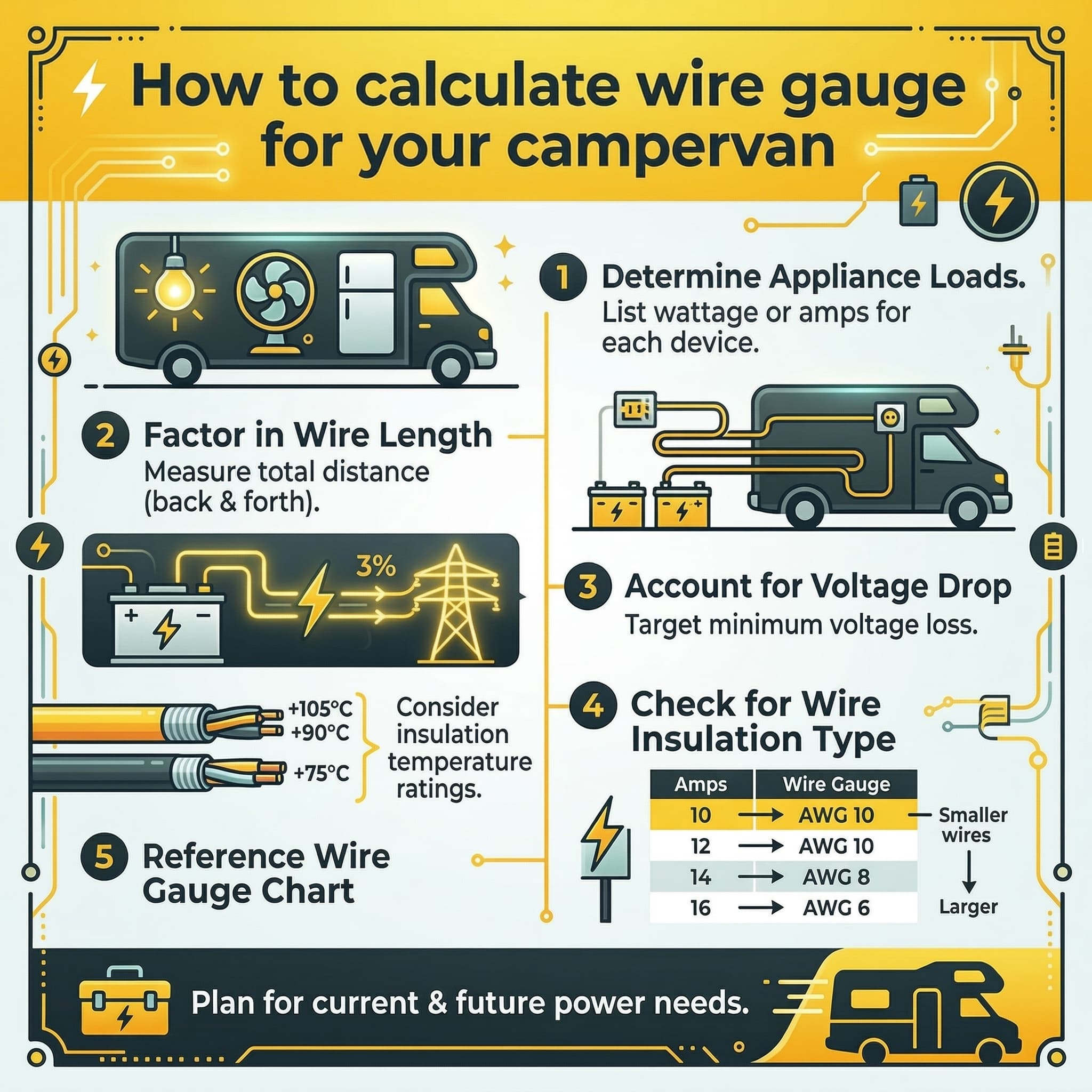
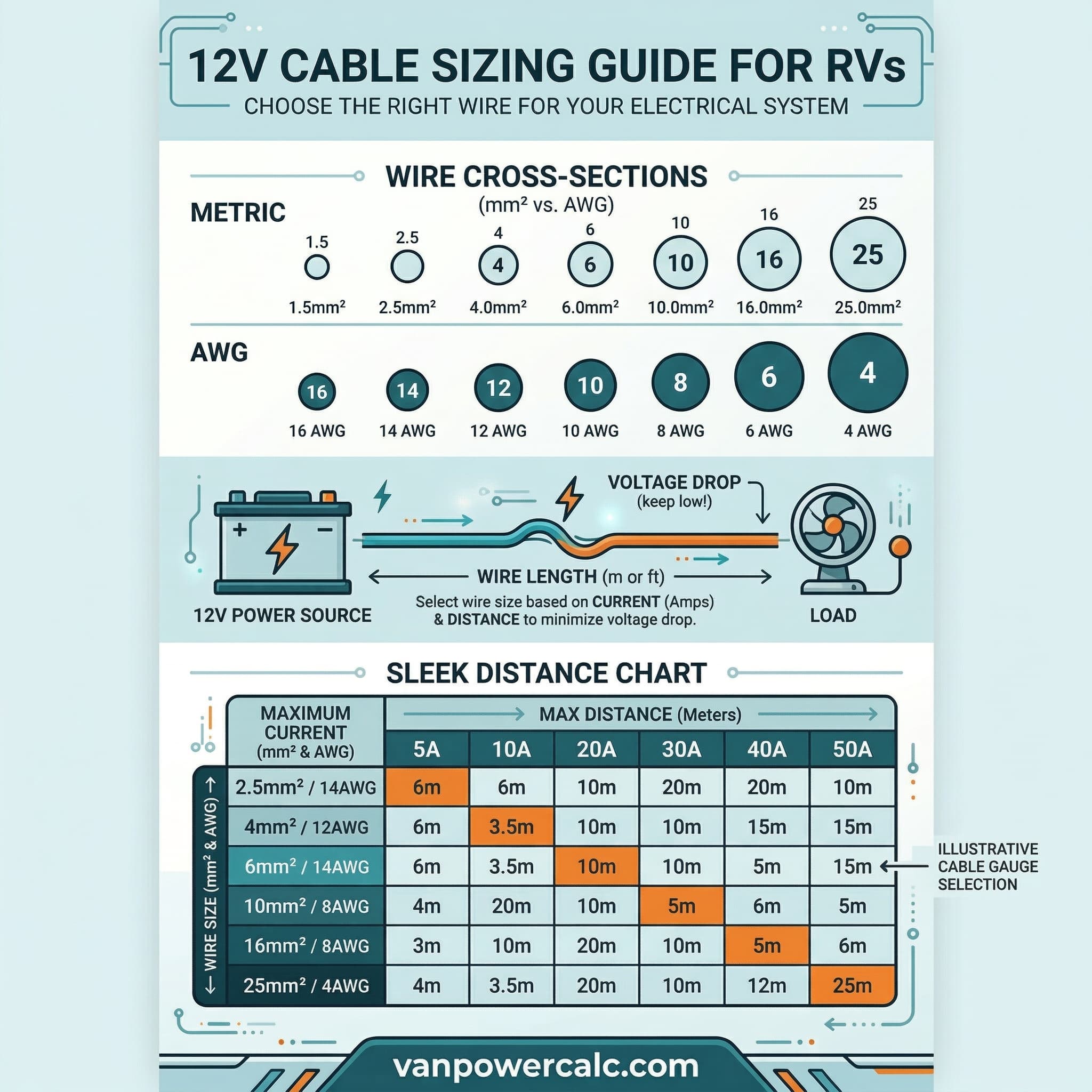
For any distance, the maximum tolerated voltage drop in a camper/van is 3% max.
INFO: You MUST use flexible multi-strand automotive wire. Rigid house wire will break from road vibrations.
3. The One Golden Fuse Rule
THE FUSE IS THERE TO PROTECT THE WIRE, NOT THE APPLIANCE.
The fatal mistake is using a fuse too big for the wire gauge, or installing it too far from the power source. ALWAYS place your Mega-Fuses (or fuse boxes) as close as directly possible to the POSITIVE terminal of your battery. If the 4mm² wire goes to your fridge and the fridge shorts out, the wire heats up violently. If the fuse is upstream, it blows. If it's downstream... you burn.
- 1.5 MM² -- MAX 10A
- 2.5 MM² -- MAX 20A
- 4.0 MM² -- MAX 30A
- 6.0 MM² -- MAX 40A
- 10 MM² -- MAX 60A

I'm Leo, an engineer and vanlifer since 2019. I've installed and tested the electrical systems in 3 different vans. Every recommendation on this site is based on hands-on experience, not copied spec sheets. I have no commercial ties with manufacturers — I only recommend what I use or would install in my own van.
Frequently Asked Questions
What wire gauge for 12V in a campervan?+
It depends on amperage and distance. For a 12V fridge (5A) at 5m, you need 6mm² (10 AWG). For a 1200W inverter (100A) at 1m, you need 25mm² (4 AWG) minimum. The rule: maximum 3% voltage drop.
How to choose the right fuse for a campervan?+
The fuse must ALWAYS be lower than the cable's maximum capacity. A 6mm² cable handles 40A max, so the fuse must never exceed 40A. Place the fuse as close to the battery as possible.
Can I use household wiring in a 12V campervan?+
No, never. Rigid household cable will crack and break from road vibrations. You must use flexible multi-strand automotive cable (ISO 6722 or FLRY-B standards).