SOLAR PANELS :
THE REAL YIELD.
300W on the spec sheet, 120W in real life. Welcome to the ruthless laws of physics in camper vans.
1. The Golden Rule: Divide by Two
A solar panel is tested in a lab, at a perfect angle at 25°C. On a van, it heats up immensely and is glued flat to a roof.
The result? A 100W panel laid flat in mid-summer will rarely generate more than 60 to 75W at peak noon. The shadow of your vent or a branch is enough to divide this remaining yield by four.
2. Rigid vs Flexible
Flexible panels are popular because they hug the roof curve (and hide your setup). But beware:
- ✔ Rigid = Longevity: Rigid panels have an aluminum frame and breathe underneath. They last 20 years and run cooler (giving more power).
- X Flexible = Microwave oven: Without an air gap, they transfer heat directly into the vehicle body. They tend to cloud over or crack in 2 to 3 years.
3. The MPPT Controller is Non-Negotiable
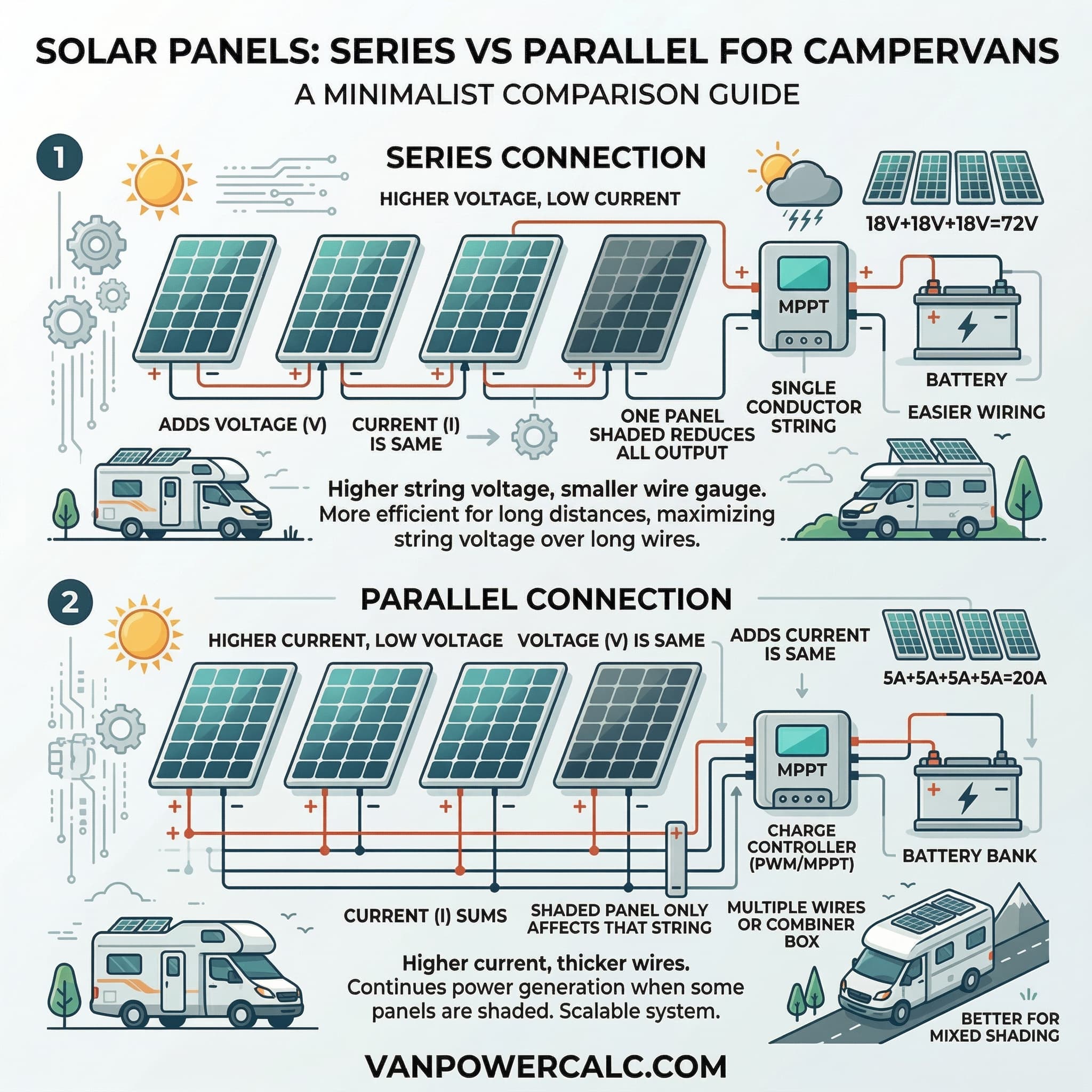
Your panel produces 18V. Your battery charges at 14V. If you use a cheap PWM controller, it clips off the excess voltage and you lose massive amounts of energy.
Get an MPPT (Maximum Power Point Tracking) controller. It acts like an intelligent gearbox: it converts excess voltage into extra amps. You get up to 30% more free energy every day. It's the absolute brain of the setup!

I'm Leo, an engineer and vanlifer since 2019. I've installed and tested the electrical systems in 3 different vans. Every recommendation on this site is based on hands-on experience, not copied spec sheets. I have no commercial ties with manufacturers — I only recommend what I use or would install in my own van.
Frequently Asked Questions
How many watts of solar do I need for a campervan?+
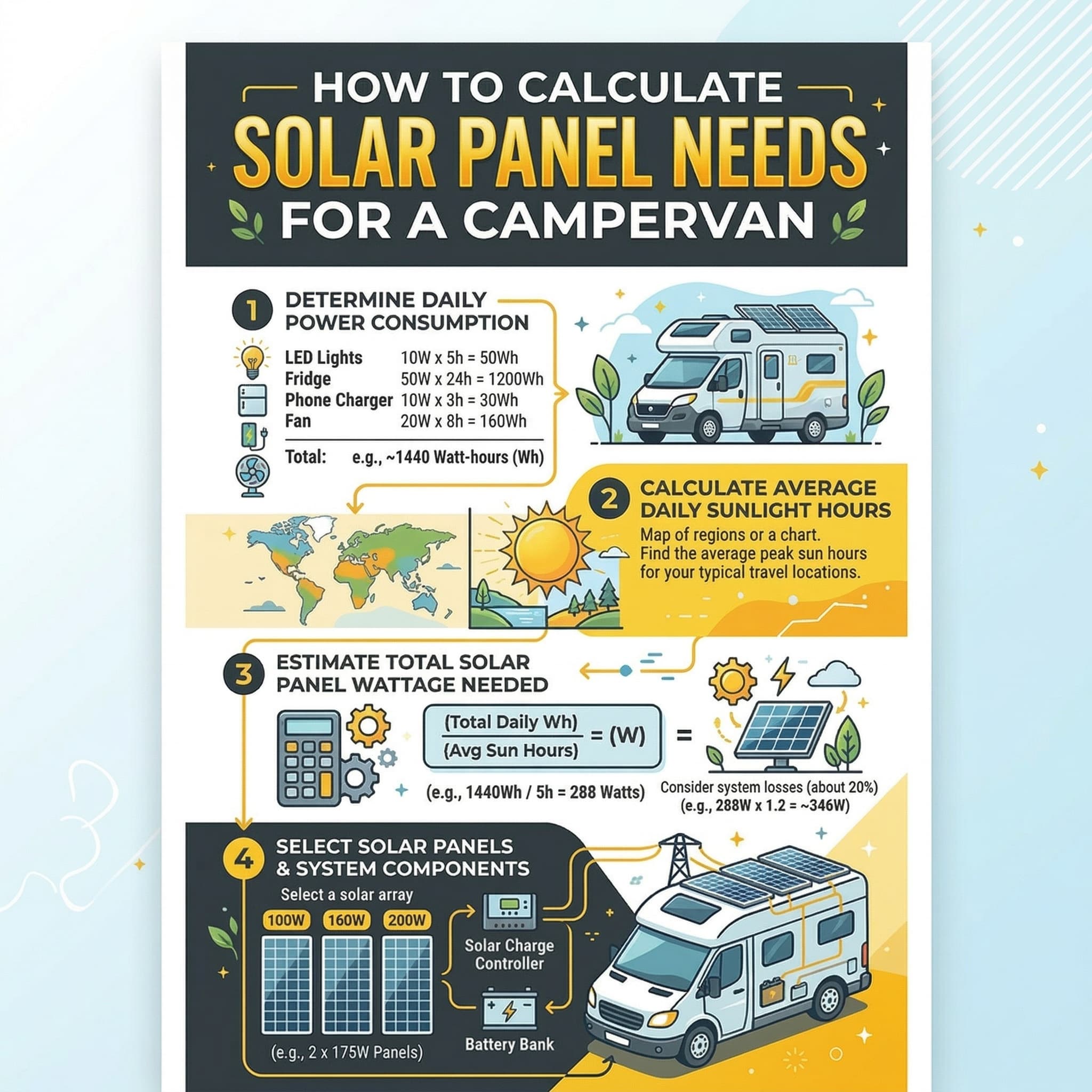
For daily use (fridge, lighting, charging), plan for 200 to 400W. For a mobile office with laptop, go for 400-600W. Real-world yield is 2-5 hours depending on latitude and season (1-2h in winter up north, 5-7h in summer down south).
Rigid or flexible solar panels for a van?+
Rigid monocrystalline for maximum efficiency (22%+). Flexible only if your roof is curved (Sprinter) or you can't drill. Flexible panels lose 10-15% efficiency and run hotter.
Do I need an MPPT or PWM charge controller?+
MPPT is mandatory. It converts excess panel voltage into extra amps, giving you up to 30% more energy compared to PWM. It's the brain of your solar system.